
I shipped a silly game to sell a keyboard, hit #4 on Product Hunt, and came away convinced the Times took this hundred-year-old playbook to another level.
I just shipped a game called QWERTYS. It’s Tetris with a twist: the board is your keyboard, and pieces made of letters fall over the same keys you type on every day. The whole thing took me a week, pair programming with Claude, and I genuinely can’t remember the last time building something was this much fun. I’m lying… I caught myself laughing out loud at 2 a.m. while building the ridiculous Tiny Mario on braille characters.
QWERTYS exists to promote Smart Keys (an iOS/MacOS smart keyboard for people like me who write in a second language and would rather not sound super awkward… maybe, just a bit). For a long time I wanted a playful thing to do that job, the way Blurry Birds does it for Bird Rise, and I kept collecting ideas about using the keyboard as a game board until one of them finally felt right.
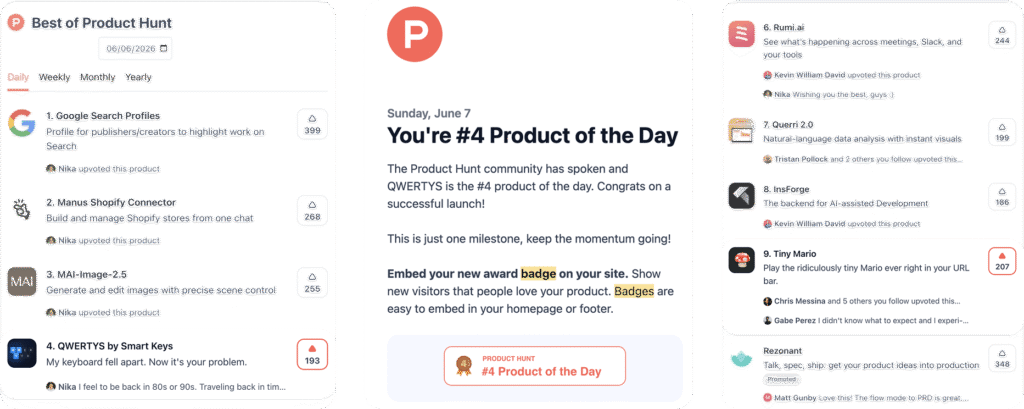
I launched it on Product Hunt and finished the day at #4. A few spots below, at #9, sat Tiny Mario. I want to be precise about what happened there: I beat Mario (okay, a tetris-inspired game beat tiny fan-made Mario, but let me have this one).
Now the part nobody puts in the launch tweet
There’s a name for this kind of stunt. The book Traction calls it Engineering as Marketing, one of the nineteen channels it walks through, and it’s the one I keep going back to like comfort food. Over the years I’ve built personality tests, small free tools, a joke site about British tea time (teatime.london), Instagram filters, strava extensions and games. All of them had the same day job, which was bringing people to whatever I was selling at the time.
I recently invested more in that channel, naively inspired by the success of The New York Times games, either by acquiring or building them. These are very casual games that keep their audience engaged and leverage virality. Ultimately, they drive users to their news (so naive… so naive, Dieguito).
Good launches! Did your revenue increase 10x?
– BFF VC
So I can tell you, with the confidence of someone who has run this experiment way too many times, that…
It doesn’t work.. sorry 🙁
I mean, at least not the way people want it to work, as the magical main channel that replaces actually marketing your product.
The spike and the drip
Every one of these launches has the same shape. You get a spike on day one, when Product Hunt or Reddit or whoever decides you’re cute that morning, and then the line falls off a cliff and settles into a quiet drip that goes on for years. The drip is real. People still find teatime.london through searches I will never understand, and a small portion are guided to my products, but it’s a drip.
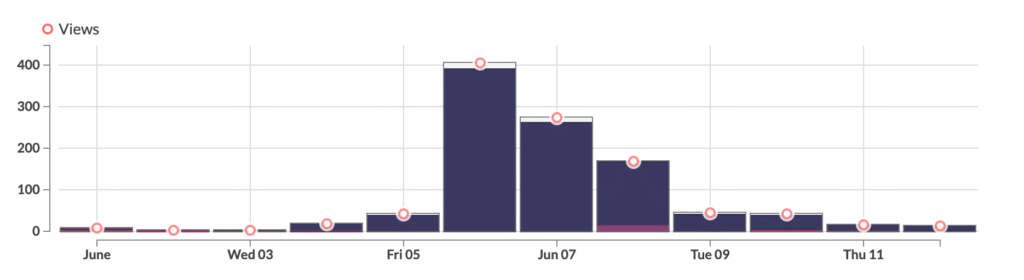
The results for downloads of Smart Keys are almost unnoticeable though. 🙁
What the drip buys you is the boring stuff that compounds. Backlinks and domain authority, some SEO, and lately a bit of AEO too (when LLMs start recommending your stuff). That already caught me by surprise. It’s not just me who is hallucinating about my product’s impact.
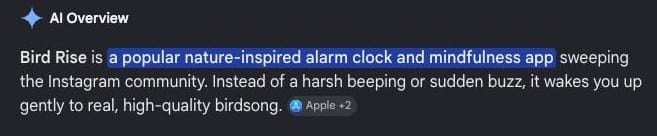
So yeah, this is the issue with channels like Eng. as Marketing, the results are quite out of your control. That’s the reason I keep it as a secondary channel with low expectations. My main engine is still paid ads, the unsexy thing I keep defending in every conversation about marketing.
A whole week, Diego. On a free game? For a drip?
– The responsible adult who lives in my head
Why I keep building them anyway
Because the math changed underneath this channel. A game like QWERTYS would have cost me a month or two of evenings a few years ago, and for a payout of “some domain authority and one fun day on Product Hunt” that’s a hard sell. It took me a week with Claude. When the price of a bet drops that much and the payout stays the same, a channel that used to be marginal becomes an easy yes. Low expectations are perfectly fine when the ticket is cheap.
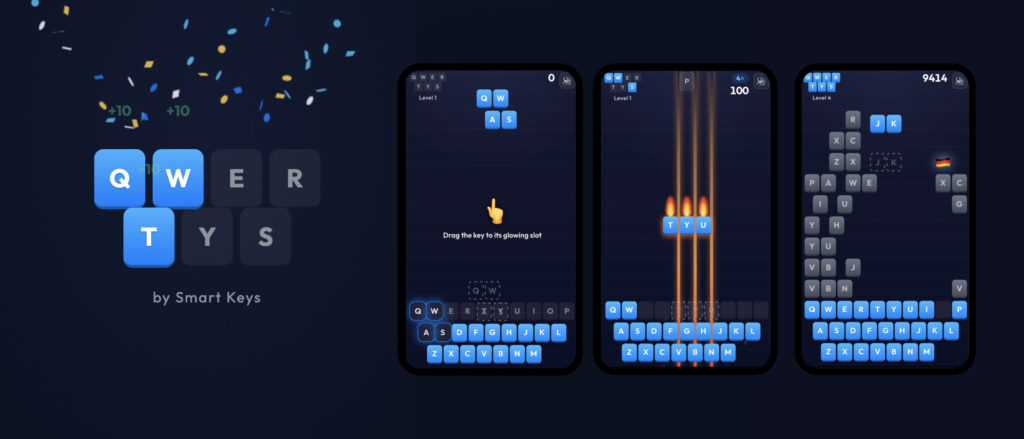
I had so much fun implementing the keyboard layout change and adding this twist to the game.
There’s also a craft reason, and it took me a few of these to see it. QWERTYS makes you stare at a keyboard, which happens to be exactly where Smart Keys lives. Blurry Birds makes you look closely at birds, which is exactly the mood Bird Rise sells. The game never demos the product, it just makes you spend time in the product’s world, and by the time you notice, my product may be presented as the obvious next step.
So you couldn’t pull off the NYT trick, and now you’re dressing it up as philosophy?
– The Horse
The New York Times is lying (a little)
All of this is downstream of the NYT, of course. They built and acquired games as a channel for the news, the crossword first and then Wordle and friends, and today Games anchors their subscription bundle. They keep saying they never became a games company. I don’t believe them, and I suspect their accountants don’t either. Something that began as lead generation is now included in their package of services.
But the truth is more interesting than the gotcha. They’re not just a games company, they’re a place where news, sports, education (their cooking section is a whole universe), and games live together, which is exactly what newspapers were for centuries. The crossword sat next to the front page and nobody had an identity crisis about it.
So their games aren’t just a channel or stunts, they’re part of their offer.
What starts as a channel
That’s the version of this I actually want to build. The Sunrise is supposed to become a place where you find entertainment, news, education and small tools that make your day a little better. Bird Rise wakes you gently, a small game nudges your brain awake, and you come away knowing one new thing about the bird that sang you out of bed. That’s the seed, and I want to grow it. Somewhere down the road I want a curated feed of news about nature and birds, the kind of thing you read with your coffee instead of doomscrolling.
So no, games won’t market your product magically, not on their own. You’ll get a launch spike, a long quiet drip, and a genuinely fun week building one. As a channel it earns a steady second place, and I’ve stopped pretending otherwise. But I love building too much to be reasonable about it, so I let that second place keep first place somewhere the metrics dashboard can’t reach (first in my heart).
And every so often, the math surprises me. Something I built mostly because it was fun turns out to be a small part of the bigger thing I actually wanted to create all along. After all, what am I here for?