
College is over, and to get out I had to hand in two things, an experimental project and a thesis. Both are about the internet, of course.
Na Revista
The experimental project was a full communication plan for a real client, and the easiest client I could find, Na Revista (narevista.com.br), the portal I built. It’s an entertainment portal for Greater Florianópolis with the party agenda, the nightclubs, the bars and lots of photos from every party. It went live in September 2002 to fight Bem na Foto, the biggest portal of the kind around here, and I made it load the party photos faster than anybody else’s (a few months later the competition started doing the same, which I’m counting as a compliment). After a year it had about 1,600 visitors a day against the competition’s 12,500, and I had already made some radio ads for it, so for the project I made it two campaigns, one for print and one for TV.
The monster in the Na Revista logo is something I stole from myself. He was the mascot of Publisite, our class website from 2000, and two years later he got a new job.
The research had the best parts. In September 2002 I interviewed 51 people at UNISUL and around Estreito, and the most useful thing I found was that most people hear about parties from their friends, which I proudly called “viral marketing” in the paper. I also counted around 17 parties in the region on an average weekend, and only 4 of them advertised on TV, radio or in the newspaper, so everybody goes to the same 4 and complains there’s nothing to do in Floripa.
There’s also a footnote saying that on a Saturday night the #Floripa channel on IRC has about 300 people in it. I may have been one of them.
A gente se vê na revista
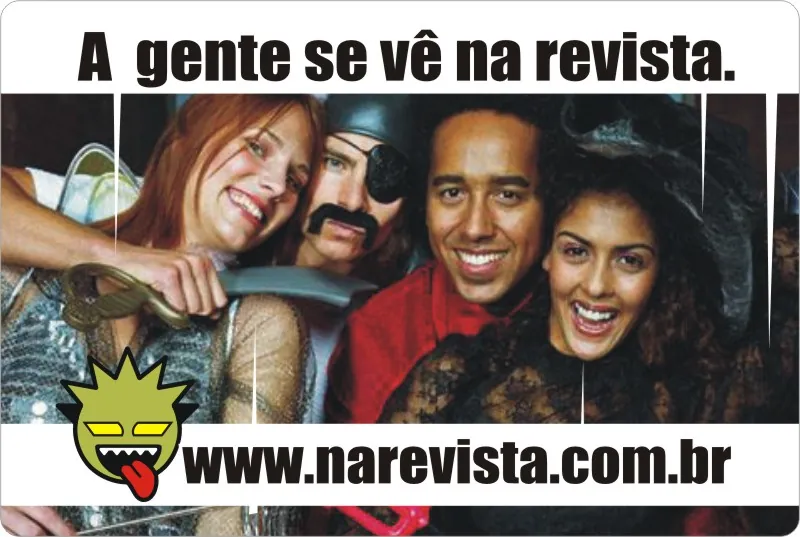
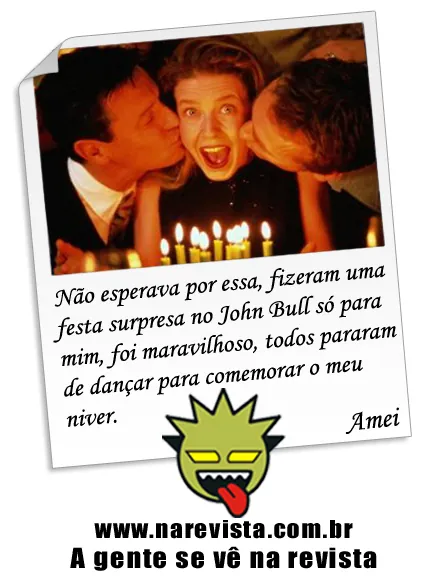
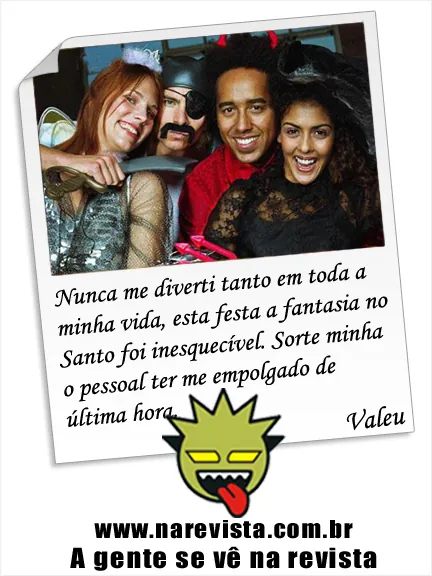
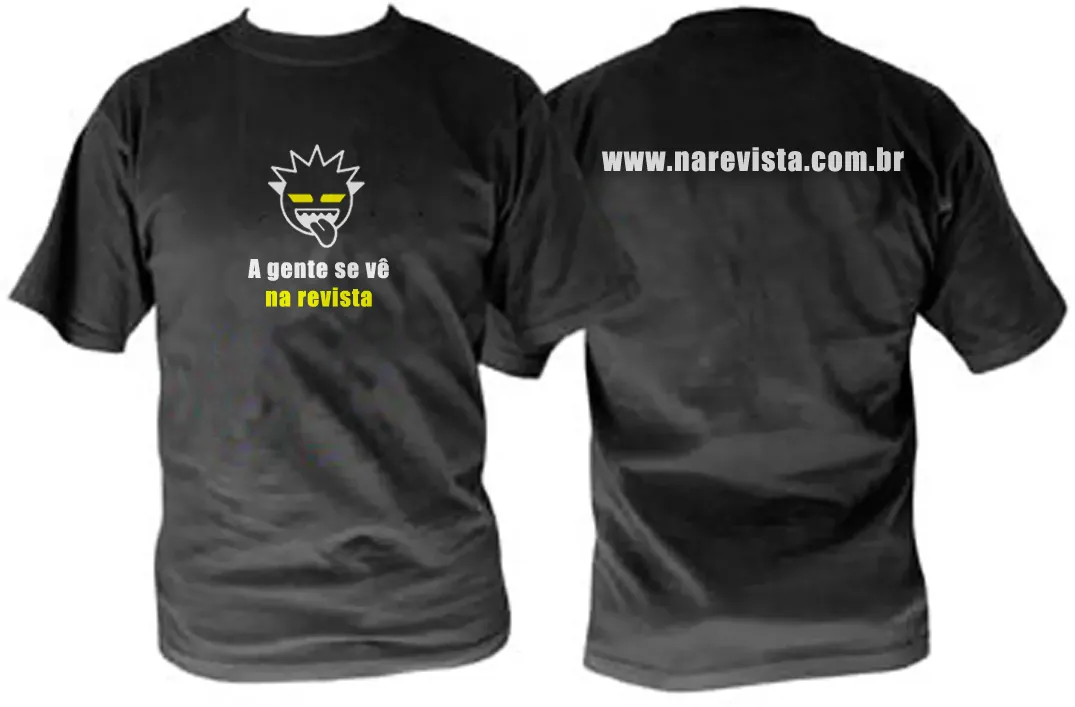
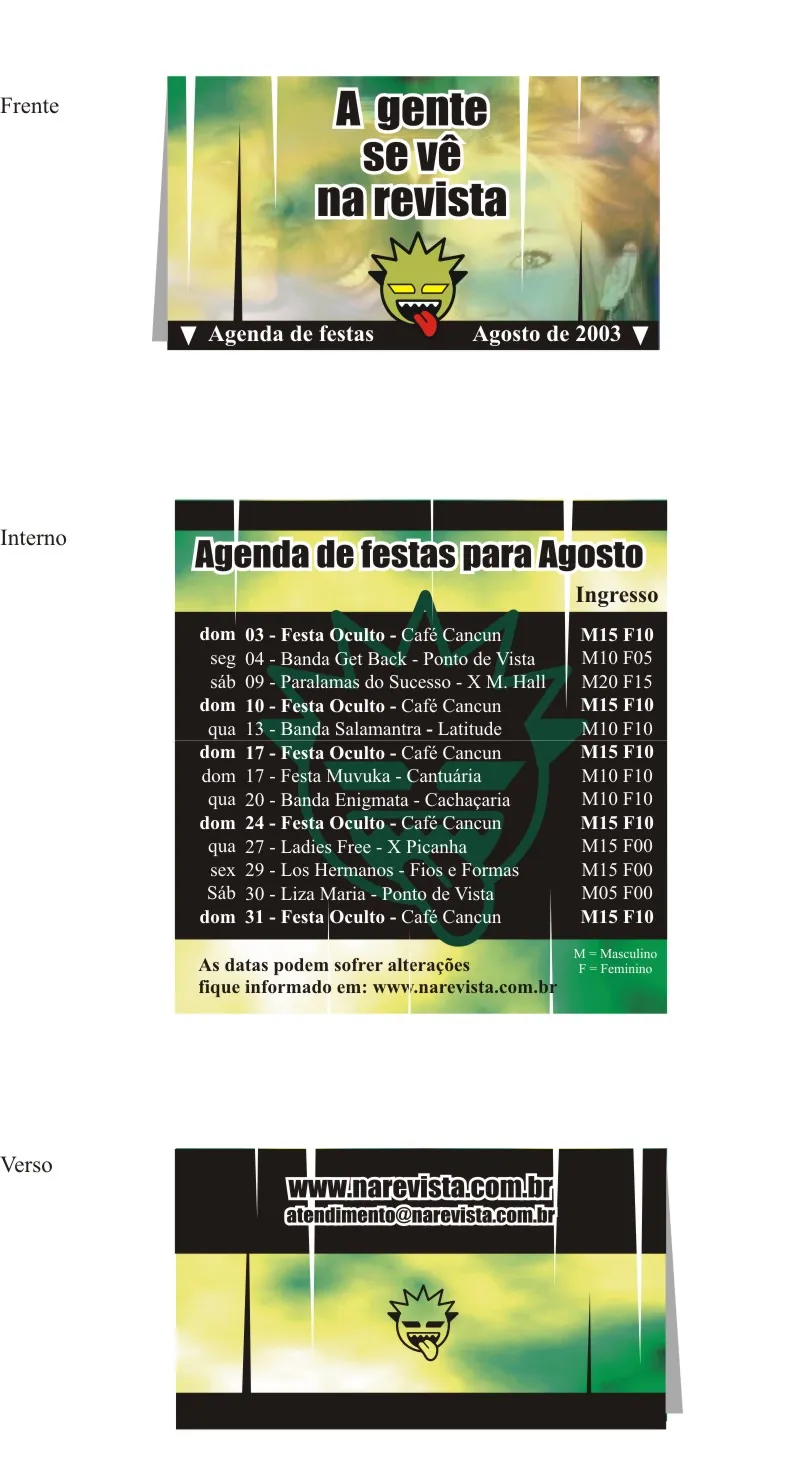
The print campaign was “A gente se vê na revista”, which means “see you na revista” and also “we see ourselves in the magazine”, because after you meet your friends at a party, the portal is where you meet again to look at the photos. It had busdoors on three bus lines, five bus shelters, a few small newspaper ads (small client, small budget), t-shirts to raffle at parties, stickers, a magnet for your computer, and a card with the 15 best parties of the month, so people would keep it in their wallet. The newspaper ads are fake polaroids with testimonials, like the guy whose friends threw him a surprise party at John Bull.

Mais adrenalina
The TV plan was three 15 second commercials (15 second spots get a 25% discount, and I was very proud of finding that out) on SBT and TVCOM for December and January. The whole thing, media, voice over, editing and creation, came to R$ 4,902.50. By then Na Revista had added a “+” to the logo, so the concept was “mais”, there’s always more to find there, mais adrenalina, mais emoção and mais diversão. Each one opens like a dictionary entry, then party photos pop up in browser windows, and it ends on the monster. The brief had a few rules, like no alcohol and nothing that looks like a rave, and one of the three was supposed to be the “spicier” one. That’s the kiss in Adrenalina (I was 20).
Ads in the virtual classroom
The thesis was “Publicidade na modalidade de educação a distância via internet”, advised by Professor Beth Goidanich. The question was simple, could you sell ad space inside an online course without ruining the course?
I added a few questions to the end of course survey of two online courses, Industrial Automation and Industrial Robotics (38 students answered), interviewed people who produce online courses, and went through a few virtual learning environments looking for a place where an ad could fit.
Most students didn’t care much. 66% said they click ads that offer something they want, 53% were indifferent to ads on the internet in general, and about ads inside their own course, 42% thought it would be interesting, 47% didn’t care and 11% thought it would be bad. The optional “why?” question had the best answers:
“I’ve already paid so much for this course, imagine with ads.”
“I don’t like it, it freezes my computer.”
“I didn’t find any promotion in the course, where can I access it?”
One student liked the idea because banners are really cool, “especially the very animated ones, made in Flash”. And one of the course producers started answering my email very seriously, then halfway through came up with the idea of selling computers inside their own courses and wrote “Oh my god!! This advertising is a virus, it’s already infecting me…”.
My conclusion was that it’s possible, but it has to be planned really carefully, with ads that are discreet and static and stay out of the way of the class, since a big animated banner would turn the classroom into an unpleasant place. Funny conclusion for a guy who spends his days making animated banners in Flash hehehe…
Would I do it again? Probably not both at the same time.