The e-Título app (made by the Brazilian Electoral Court) wants to know where I am before it asks who I am. I tap the button to justify my absence, and a little GPS icon spins while it makes sure I’m nowhere near my polling station in Florianópolis. Then come a few questions, which I answer with my thumb.
Theeeen the camera opens. A white oval frames my face and asks me to turn my head to the left, and then to the right, like a NO reaction (in a tight runoff between the left and the right, I feel sad not being part of it).
Surprisingly, it never asks me for a password.
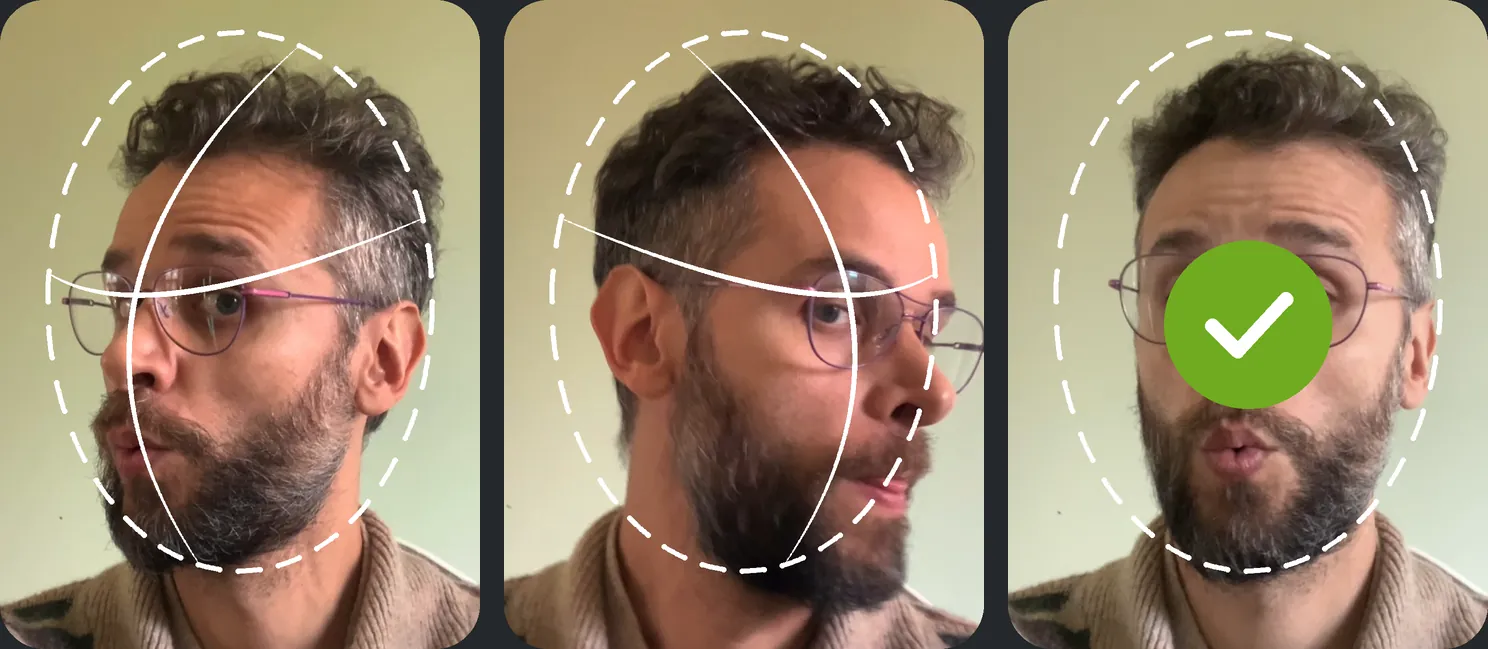
The screen turns green and my absence is officially justified, in less time than it took to write this paragraph.
Banks call this KYC, Know Your Customer, and my bank app made me do the same dance when I opened my account. That phone is also my wallet at the coffee shop and my boarding pass at the gate. My driver’s license lives in there too, next to my doctor’s appointments. (My attempts to disconnect from my phone are getting harder and harder.)
So the phone is good enough to prove to the Brazilian government who I am and where I am, and good enough to get me excused from voting. To actually vote, I’d still have to be standing in a school classroom in Florianópolis on a Sunday (6k miles or 10k kilometers from where I am now).
Sunday in Brazil
That Sunday was the runoff between Flávio Bolsonaro, the son of former president Jair Bolsonaro, from the right-wing Liberal Party (liberal as in free markets, not the American kind), and Lula, from the left-wing Workers’ Party. Almost nobody expected Lula to win. Flávio had beaten him in the first round three weeks earlier, 47% to 45%, and 10 of the 12 polls released in the last two days had him ahead again.
Lula won with 51.8%. So Brazil went right, then left. Nobody who came second in a first round had ever won a Brazilian runoff since direct elections came back in 1989 (France 24 has the backstory).
The day itself was a mess. In Salvador at least 75 buses never left the garage, and Lula’s campaign reported the same problem in nine other states, while in parts of São Paulo and the South it rained hard enough to flood streets and move polling places. Both campaigns ran to court asking for more time to vote, Lula’s because of the buses and Flávio’s because of the rain.
In a campaign where they agreed on nothing, the left and the right finally turned their heads to the same side.
About half an hour after the request reached him, Supreme Court justice Cristiano Zanin extended voting by two hours in the whole country. The decision came so late that many polling sections had already closed, and they didn’t have to reopen.
The number behind the headline
Hmmm… then I looked at the numbers. Lula won by more than 4 million votes, while more than 30 million people, about 19% of the voters, didn’t vote at all.
The people who stayed home were almost seven times the margin.
And voting in Brazil is mandatory, by the way. If you skip it, the fine is at most R$ 3.51 (less than a dollar), or nothing at all if you do what I did with the app. For Brazilians registered abroad it’s even worse. Out of more than 900k of them, 58% stayed home in the runoff, three times the national rate. When your polling station is a consulate a few states away, voting turns into a road trip.
Why Lula grew so much in the runoff is anybody’s guess. The vote is secret, so all we get are totals. Between the two rounds he gained more than 10 million votes and Flávio almost 4 million, and those votes could have come from a lot of places: about 9 million people whose candidates were out after the first round, almost 2 million fewer blank or null votes, about 3 million more people at the polls, or a campaign that turned in the last three weeks while most polls still pointed the other way. Probably a bit of everything.
Between the first round and the runoff, Lula went from about 53.9 to 64.3 million votes and Flávio Bolsonaro from 56.1 to 59.8 million, while the people who didn't vote went from 33.5 to 30.5 million. (This spot has an interactive chart, by state, that needs JavaScript.)
Meanwhile, in Estonia
Estonia went the other way. People there have voted over the internet since 2005, and in the 2023 parliamentary election more than 300k people voted online during the six days before election day. For the first time that was more than half of everyone who voted.
In Estonia, online votes grew from 1.9% of everyone who voted in 2005 to 51.1% in the 2023 parliamentary election, then dropped to 41.7% in the 2024 European election and came back to about 45.6% in the 2025 local election. (This spot has an interactive chart that needs JavaScript.)
Six days also means one bad Sunday can’t break the election. Nobody has to count on a bus showing up, or on a judge deciding at 5 p.m. if the polls stay open. And it’s cheaper. When Estonian researchers did the math for the 2017 local elections, each online vote cost the state €2.32, about half of a paper vote on election day (€4.37). Brazil isn’t cheap to run either: the TSE set aside about R$ 1.3 billion for the 2022 election, around R$ 8.50 for every voter.
Even there, though, the phone doesn’t get to vote. You vote in an app on a computer, and the phone can only prove it’s you (with Mobile-ID or Smart-ID) or check that your vote arrived. A 2024 law opened the door to voting on a smartphone, but in 2025 the electoral committee voted 4 to 3 against using it, because they weren’t sure an app distributed through Apple’s and Google’s stores could be audited. So the country I was using as the shiny example is stuck in the same spot as my e-Título, with a phone trusted to know who you are but not to carry your vote.
Sure. And who’s holding the phone when you vote, Diego?
– The Horse
Fair, and Brazil knows this one well. A century ago rural bosses told their workers how to vote (we even have a name for it, voto de cabresto, the halter vote), and the secret ballot, in 1932, was the fix. Estonia’s answer is that you can vote online as many times as you want and only the last vote counts, and a paper ballot beats every online vote, so the boss looking over your shoulder doesn’t get the last word. It doesn’t solve all the problems, but about 70% of Estonians said they trusted online voting in the surveys the University of Tartu ran until 2019, and a government poll in 2025 put it at 54%.
Brazil isn’t starting from zero
Estonia’s trouble made me look back home, and Brazil is weirdly good at public tech. We’ve voted on electronic machines since 1996 (everywhere since 2000), and the results usually come out the same night. We trust a computer to count every vote, as long as you’re standing in front of it in a classroom.
In 2020 the Central Bank launched Pix, an instant payment system, free for individuals, that 93% of Brazilian adults now use, from street vendors to dentists. It got popular enough to annoy Donald Trump, which is a weird kind of compliment for a payment system.
The phones are already there too. In 2024, 89% of Brazilians over 10 used the internet, and almost all of them do it through a phone, while only about a third use a computer. Estonia is just as connected (95% of households are online), but its online vote still needs a computer, and copying that would leave most Brazilians out. If Brazil ever does this, it has to happen on the phone, the same one that already handles my Pix and my face check.
Access to democracy
“Who is actually interested in making it easier to vote?” This question has been growing in my mind since this election, and since I read The Sum of Us, a book by Heather McGhee that talks about many of the issues around the way the US deals with elections. The more I turn it around, the less I like the flipped version. Who wins when voting is hard?
I don’t have an answer, and I’m suspicious of anyone who says they do. I’ve been poking at this for a while, though. In 2016 I emailed the new council members of Florianópolis asking them to pick their advisors through an open process, with a little tracker in the email to see who read it (the whole story is here). Some of them opened it several times. Most of them never answered.
There’s also a good argument against the whole access idea. Making it easier to vote doesn’t make anyone better informed. If people show up without knowing why they’re voting or what the candidates plan to do, whoever makes the most noise wins, and that’s exactly where populists and meme candidates grow. Brazil has a famous example. In 2010 a TV clown called Tiririca became the most voted federal deputy in the country, with more than a million votes and a slogan that went “it can’t get any worse than it is”.
So access is only half of it, and the other half is people knowing what they’re voting for.
Back to direct democracy?
In ancient Athens, people didn’t vote for representatives. They voted on the laws themselves, gathering by the thousands on a hill called the Pnyx and raising their hands. The catch was who got to count as a citizen (you can guess who, and it wasn’t much different from most of the world 100 years ago). Today we flipped it, and almost everyone votes, but only for someone who will decide for them.
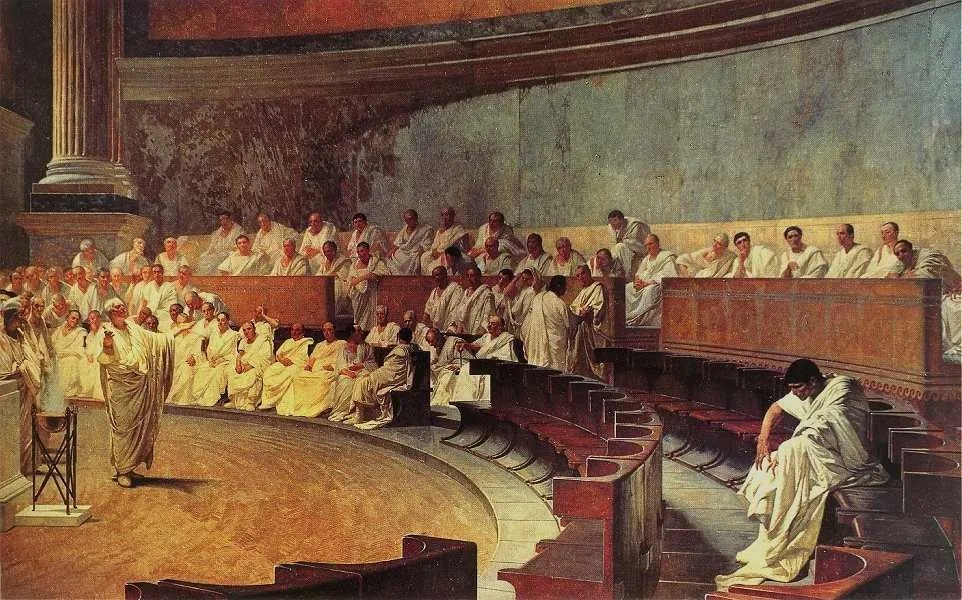
If people could vote from their phones over a whole week, I don’t think the vote itself would have to look the same. Instead of picking one person to decide everything for four years, you could vote on the plan, item by item, a bit closer to Athens but with everyone invited (Switzerland already does a slower version of this a few times a year, mostly on paper and by post, and a few cantons are now trying it online).
So, as a naive tech bro who thinks everything can be solved (or destroyed) by tech, I made a prototype of what voting in this runoff could have looked like on a phone, with ten proposals from the two candidates’ plans, five from each, and the names hidden until the end. And like the red booklet the Swiss get in the mail before every vote, each proposal comes with an argument for and one against.
This spot has a small interactive prototype, Election 2026: a phone ballot with ten proposals from Lula's and Flávio Bolsonaro's 2026 government plans, five from each, to vote yes or no on without knowing whose they are. It needs JavaScript. The proposals are summarized from the plans as compared by Gazeta do Povo and the Council on Foreign Relations.
Maybe voters would talk less about heroes and villains and more about what’s actually in the plan. Eventually each proposal could have its own team to run it, approved on its own and with its own deadline. Maybe we could finally get rid of kings… I mean, presidents, altogether?
Neeeeeigh… Naive! Don’t you know how power and human behavior work?
– The Horse, king of this blog
Please don’t kick me, Your Majesty. Switzerland, again, kind of does this already: seven people share the job, and the presidency rotates every year.
Even the US almost went that way. In 1787 Edmund Randolph wanted three presidents and called a single one “the foetus of monarchy”. He lost, 7 states to 3, with George Washington voting for the single one.
Meanwhile, I’m one of those 30 million who didn’t vote. I wanted to, but the e-Título kept crashing when I tried to move my vote to San Francisco.
It didn’t crash my dream, though
that one day, left and right,
won’t mean, heroes and villains.
Just a gentle turn of my head
to cast my vote.